
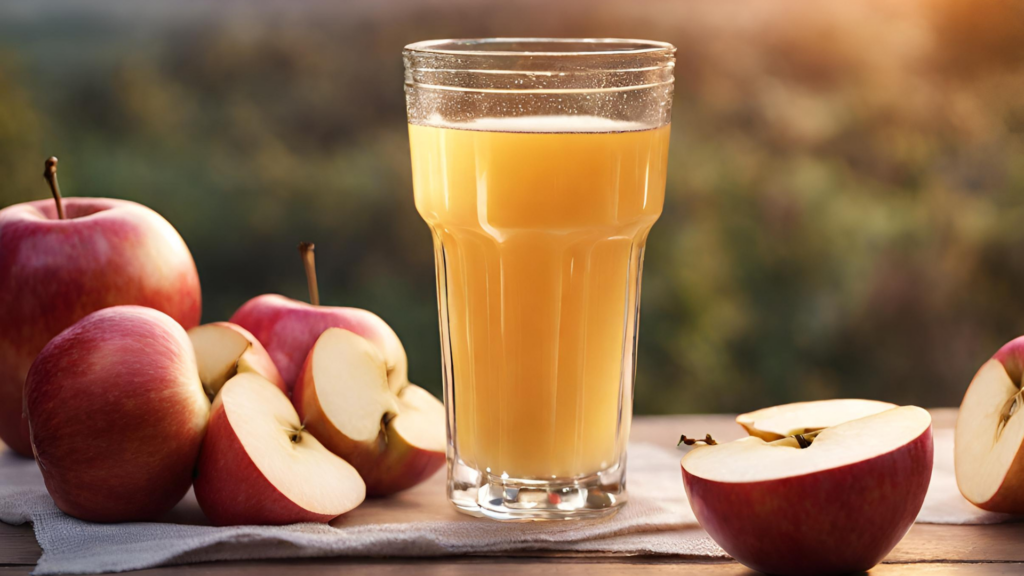
You grab a bottle of apple juice from the fridge and assume you’re getting most of what an apple has to offer. Reasonable assumption. It’s called apple juice, after all. But somewhere between the orchard and the bottle, a fair bit of the actual apple gets left behind.
The way an apple is processed changes what ends up in your glass. Juicing and crushing sound similar, but they’re doing very different jobs. Once you understand what happens at each step, the label on the bottle starts to read a bit differently.
What happens when an apple gets juiced
Traditional juicing is a separation process. Apples go through a press or an extractor that squeezes out the liquid and pushes the solids aside. What comes out is a clear, thin juice. What gets discarded is the peel, the pulp, and most of the fibre.
That leftover material, called pomace, is where a lot of the good stuff lives. Apple peels hold a decent share of the fruit’s antioxidants and polyphenols. The pulp carries most of the fibre. When those parts go to waste (or animal feed), the drink that’s left is mostly water and natural sugars.
A lot of commercial juices then go through extra steps. Many are made from concentrate, which means the juice is boiled down to a syrup for transport and reconstituted later with water. Some get pasteurised at high heat, which can knock down heat-sensitive vitamins. Others have added sugar, flavours, or preservatives.
So, is apple juice healthy? It depends on what you’re comparing it to. Compared to soft drink, sure. Compared to a whole apple, not really. Most of the apple juice benefits you hear about tend to belong to the whole fruit, not the strained-and-clarified version in the bottle.
What happens when an apple gets crushed
Crushing is a completely different approach. Instead of separating the liquid from the solids, the whole cored apple goes in and stays in. Peel, pulp, juice, fibre. Nothing is stripped out and nothing is thrown away.
This is how Upple is made. We take a whole cored apple, crush it, and put it straight in the bottle. That’s why Upple looks cloudy rather than clear. The cloudiness is the pulp and fibre. It’s the reason a crushed apple drink and a juiced one taste and feel so different, even when they start with the same fruit.
Because nothing is removed, you’re getting the whole apple in a form that’s easier to drink than to chew. No concentrate. No heat treatment. No added sugar, sweeteners, flavours, colours, or preservatives. Just Pink Lady or Granny Smith apples, plus a small amount of vitamin C to keep things fresh.
The nutrition side by side
The clearest difference is fibre. A 130mL serve of Upple contains at least 2g of fibre, compared with roughly 0.4g in the same amount of regular apple juice (source: FSANZ Australian Food Composition Database). Fibre is one of the reasons the benefits of eating apples add up the way they do. It slows down how quickly the natural sugars in the fruit hit your bloodstream, which may help you feel satisfied for longer.
Then there are the polyphenols and antioxidants that sit mostly in the peel. When the peel goes into the drink, so do they. When the peel goes into the compost bin at the juice factory, they don’t.
The sugar figures are worth a look too. The sugars in an apple aren’t the villain when they come packaged with fibre and pulp. It’s when everything else is stripped away that a fruit drink starts behaving less like fruit and more like a sweet beverage. Keeping the whole apple in the bottle keeps the balance the fruit already had.
Where the apples come from
Upple is a family business. The Savio family are third-generation apple growers from Queensland’s Granite Belt, with more than seventy years of orchard experience between them. The apples in every bottle come from their own trees around Stanthorpe.
A lot of those apples wouldn’t make it into a supermarket display. They might be a bit small, a bit lopsided, or have a small blemish where a leaf sat on them in the sun. Cosmetically imperfect, but nutritionally the same as their prettier neighbours. Crushing gives them a purpose instead of a compost heap, and cuts down on the fruit that ends up as food waste.
The bottle is shaped like an apple for a reason, and it’s made from 100% recycled plastic. Small choices, but they stack up.
Who this actually matters for
For most Aussie families, a crushed apple drink is a straightforward way to get more whole fruit into the day without extra effort. Slip a bottle into a school bag, keep one in the car for after sport, hand one over on a chaotic morning when toast is not happening. It’s a way to tick off a fruit serve when life is moving quickly.
It also matters a lot for people who find eating a whole apple difficult. Kids who won’t touch anything that crunches. Older Australians dealing with dental issues. People with texture sensitivities or eating and swallowing difficulties, including those supported through our partnership with Able Foods. Drinking a crushed whole apple opens up the same nutrition to people who might otherwise miss out on it entirely.
So which is which?
Apple juice is a clarified, filtered drink where the fruit’s fibre and pulp are removed before bottling. Crushed apple, the way we do it, keeps the whole cored fruit in the mix. Same starting point, very different finish.
If you want the closest thing to eating a whole apple, without doing the actual eating, crushed is the answer. If you’re happy with something sweeter and lighter that behaves a bit more like a soft drink, juice will do the job.
Next time you’re standing in front of the fridge at the shops, have a look at the label. If you can see through the bottle, you’re mostly holding sugar water. If it’s cloudy and thick, there’s probably more of the actual apple in there. That’s the bit worth drinking.
Find your nearest Upple stockist at upple.com.au/stockists and taste the difference a whole cored apple makes.