
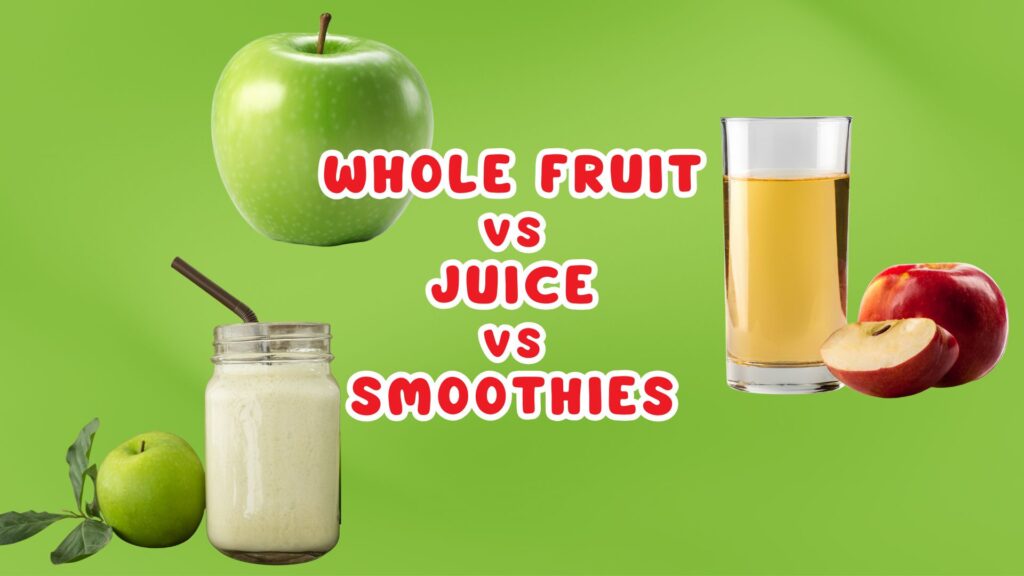
We’ve all been told to “eat more fruit.” But when it comes to getting your daily dose of fruit, there are plenty of options from eating a whole apple to grabbing a juice or blending up a smoothie.
So what’s really the difference between them, and how much of the goodness of whole fruit are you actually getting?
Let’s peel it back (pun intended) and take a closer look.
Whole Fruit: The Gold Standard of Goodness
Eating whole fruit is nature’s way of delivering nutrition exactly as intended.
A whole apple, for instance, contains:
- Fibre that keeps you fuller for longer and supports gut health
- Natural sugars balanced with fibre to slow energy release
- Polyphenols and antioxidants found mostly in the peel and pulp
- Water to help keep you hydrated
When you bite into a whole apple, you’re getting the complete package, nutrients, fibre, texture, and flavour, all working together to nourish your body.
Juice: Convenient, But What’s Missing?
Juice might taste like fruit, but it’s missing a few key ingredients – literally.
Most commercial juices are filtered and pasteurised, meaning much of the fibre and some of the naturally occurring phytonutrients (found in the peel and pulp) are lost in the process. What’s left is mainly fructose and water, which can cause a rapid spike in blood sugar.
That doesn’t make juice “bad,” but it does mean it’s not quite the same as eating the fruit itself. A single glass of apple juice might come from three or more apples, without any of the fibre to balance it out.
Smoothies: A Step Closer (But Still Not Whole)
Smoothies are a better option for retaining fibre, especially when made with whole fruit. However, many store-bought or café smoothies are blended with juice, yoghurt, or sweeteners, which can tip them into dessert territory rather than a simple fruit serve.
Even homemade smoothies, though nutritious, often lose the natural texture and slow-release benefits of eating the fruit in its original form. Once blended, fruit sugars are more rapidly absorbed by the body, similar to juice, especially if consumed quickly.
Enter Upple: The Best of the Whole Apple, in a Bottle
That’s where Upple comes in, a drink made from 99.9% whole cored apples that have been crushed, not juiced.
It’s not an apple juice, and it’s not a smoothie. It’s whole fruit you can drink, including the peel, pulp, and fibre that are usually lost in juicing.
With Upple, you’re getting:
- The fibre of a whole apple, to keep you satisfied
- The antioxidants and polyphenols from the peel and flesh
- The natural sweetness of real apples: nothing added, nothing taken away
It’s a convenient way to enjoy all the goodness of fruit, especially on those days when eating a piece of fruit just isn’t practical.
So, What Are You Actually Drinking?
- Whole Fruit: The complete package: fibre, nutrients, water, and crunch.
- Juice: Hydrating and tasty, but mostly sugar and water.
- Smoothie: Better for fibre, but often overloaded with extras.
- Upple: Whole fruit, cored and crushed: giving you the convenience of a drink with the nutrition of an apple.
The Bottom Line
Whole fruit will always be the benchmark for nutrition. But if you’re looking for something fast, easy, and genuinely good for you, Upple brings the orchard to your bottle.
It’s what you’d get if you could drink an apple — peel, pulp, fibre and all.